The Visegrád Group countries (Hungary, Poland, the Czech Republic, and Slovakia) have, since the end of the Cold War, transitioned from recipients of international aid to emerging donors. EU accession required these states to establish their own development cooperation policies. During the first decade of membership, their approach was formally similar to the “Western” OECD/DAC model, but with very low aid volumes. All four countries emphasized a specific comparative advantage—their experience of transitioning out of communism—which they presented as a contribution to the development of others, especially in post-Soviet states.
However, over roughly the past decade their donor policies have begun to diverge. Hungary stands out in particular, as its approach has acquired a distinctive profile. Under Viktor Orbán’s government, Hungary has significantly increased its allocations for Official Development Assistance (ODA) and has steered them toward its own strategic objectives, including economic interests and religion-based diplomacy.
Political and Geopolitical Dimensions of Hungary’s Donor Policy
Hungary has shaped its development assistance policy in line with the broader foreign-policy ambitions of Viktor Orbán’s government. Orbán’s national-conservative cabinet proclaimed a strategy of “Global Opening” (2011) aimed at reducing dependence on the West and positioning Hungary as a more autonomous actor on the international stage. This entailed strengthening ties with countries of the East and Global South—such as China, Russia, and Turkey—which the Orbán government regards as influential powers and economic partners to be engaged “pragmatically.” In that context, between 2011 and 2015 Hungary significantly expanded its diplomatic footprint in Africa by opening new embassies. A stronger presence in Africa also serves to build broader influence in multilateral settings—for instance, by securing votes or support from African states at the UN and other fora—thereby seeking to enhance Hungary’s foreign-policy leverage.

At the same time, the Hungarian government views ODA as an instrument of national security. Following the 2015 migrant and refugee crisis, Orbán developed a narrative that development aid is a way to address the root causes of migration. The goal is to help people remain in their home countries rather than being forced to move to Europe. This logic serves a dual purpose: it contributes to stability in crisis-affected areas (a legitimate humanitarian objective), while also providing justification for Hungary’s strict anti-migration stance. In Hungarian officials’ framing, “we will help them there so they won’t have to come here” became a motto linking development assistance to domestic migration-control politics.
Economic Interests and “Tied Aid”
Hungary openly integrates economic pragmatism into its development assistance policy. In its International Development Cooperation Strategy for period 2020–2025, one of the five key pillars is the creation of export opportunities for Hungarian companies. Unlike the Czech Republic and Slovakia —which tend to mention the private sector primarily in terms of mobilizing additional resources for development —Hungary explicitly frames national interests, i.e., economic gain, as a legitimate objective of its development policy. This approach is closer to the “win-win” model associated with some emerging donors such as China than to the rhetoric of Western donors, who typically foreground altruistic goals, even though they, too, often pursue underlying economic motives.
A concrete mechanism for supporting Hungarian firms is the use of so-called tied aid credits. Through concessional lending programmes, the Hungarian government extends loans to governments in developing countries on the condition that projects financed by these credits are implemented in cooperation with Hungarian companies or involve the procurement of Hungarian equipment. This programme expanded significantly after 2010, in parallel with Orbán’s return to power. By 2020, the total volume of approved tied credits had exceeded several hundred million U.S. dollars. In practice, Hungary thus directly stimulates its export industry. More specifically, Hungarian companies build water-supply facilities, energy and healthcare infrastructure, and similar projects in partner countries, financed from Hungarian sources. The water sector has been singled out in particular as a priority of Hungary’s development diplomacy, reflecting the fact that Hungary has strong firms and technologies in water management.
This “tied aid” generates economic benefits for the donor, but it runs in opposition to OECD/DAC guidelines, which encourage traditional donors to make aid as “untied” as possible—i.e., open to international competition. Whereas Western donors today predominantly provide grants and loans without tying them to their own firms, Hungary actively links its assistance to the promotion of domestic business. Beyond credits, the Hungarian state also frequently engages domestic NGOs or religious communities as project implementers, thereby keeping funds within its own orbit of interests.
Of course, Western countries also have economic drivers within their aid portfolios — for example, export credit agencies or trade cooperation funds—but they rarely embed business interests into development assistance strategies as openly as Hungary does. This difference reflects a broader trend in which Hungary (and, to some extent, Poland) appears willing to move away from the EU and OECD’s “normative” framework, tailoring aid more directly to its own agenda.
Cultural and Religious Factors: Defending Christianity as a Mission
The most distinctive feature of the Hungarian model is its prominent cultural and religious narrative in both justifying and directing aid. Orbán’s government presents itself as a defender of Christian values and culture, within Europe and globally. Hungary’s Christian identity is portrayed as being under threat from various “transnational challenges,” most commonly the mass inflow of migrants from predominantly non-Christian cultural backgrounds. In this vision, Hungary assumes the role of a bastion of Christianity, consistent with Orbán’s broader political project.

This framing led to the establishment of the state programme Hungary Helps in 2017. A dedicated institutional structure was created to implement it: first, a State Secretariat for Aid within the Prime Minister’s Office, and later a separate Hungary Helps Agency under the Ministry of Foreign Affairs. The programme rests on several clear operational principles: (a) working in partnership with local religious communities (churches and faith-based NGOs) in vulnerable areas; (b) basing interventions on needs identified by representatives of those communities themselves; (c) providing direct assistance without intermediaries—where possible, funds go straight to local actors rather than through large international organizations, in order to avoid administrative overhead; and (d) delivering support in the form of donations, without conditionality or debt, with the aim of quickly alleviating suffering. The programme explicitly rejects any intent of proselytism (it does not seek to convert non-Christians); rather, it supports the survival of existing Christian communities in their places of origin.
The programme has four pillars: (1) emergency humanitarian assistance; (2) stabilization and peacebuilding support; (3) development assistance; and (4) scholarships.
Hungary’s public narrative highlights two ostensibly noble motives behind this initiative. The first is solidarity with persecuted Christians — a moral obligation to assist communities facing extremism, the devastation of war, or discrimination on account of their faith. The second is the already mentioned aim of curbing migration: if Christians in, for example, Iraq, Syria, or Nigeria can rebuild their homes and churches, they are less likely to move toward Europe as refugees. These two rationales are presented publicly as a combination of “value-based” and “pragmatic” reasoning. However, research suggests that declared motives also mask underlying interests. Paragi and Szent-Iványi (2023) show that there was no broad domestic public demand or electoral pressure in Hungary calling for such a programme. In other words, for the average Hungarian voter, the plight of persecuted Christians in distant countries was not a priority; rather, the government itself introduced the issue into public discourse. The authors therefore conclude that Hungary Helps has been partly instrumentalized: it serves to enhance Hungary’s influence in certain international circles — above all among senior Christian clerical figures and conservative political groups in the West (for instance, in the United States). Through this policy, Orbán’s government has cultivated close ties with influential Christian organizations and leaders, positioning itself as a global protector of Christians — an image that has earned an admiration in conservative circles. For Budapest, this is significant because it enables alliances outside the EU mainstream — for example, partnerships with U.S. evangelical leaders and politicians, who can serve as potential allies against „liberal pressures“ on the Orbán regime.
The Hungary Helps Programme and Activities in African Countries
Although the Hungary Helps programme initially emerged primarily as a response to the crisis in the Middle East (the war in Syria and the takeover of large parts of Iraq by ISIS), it gradually expanded into Africa as well. Available data indicate that as much as 71.8% of Hungary Helps projects up to 2022 were implemented in the Middle East, while a substantial share—approximately 16%—took place in Ѕub-Saharan Africa. In numerical terms, this amounted to 82 projects in African countries (out of 263 projects globally over the 2017–2022 period). The total value of these African projects exceeded €12.5 million, out of roughly €76 million allocated by the programme from its establishment through 2022. Thus, while the Middle East continues to dominate overall spending (given the scale of reconstruction in Syria, Iraq, and Lebanon), Africa has become the second most important region for Hungary’s humanitarian and development assistance.
In Africa, the programme is most active in countries where Christian communities face acute needs due to violence or poverty. For instance, in Nigeria — where extremist groups such as Boko Haram have terrorized Christian communities in the north. Hungary has provided emergency humanitarian assistance and worked with local churches to help rebuild infrastructure after attacks. Similarly, in countries such as the Democratic Republic of the Congo, the Central African Republic, or Ethiopia, Hungarian funding has supported projects run by churches and Christian organizations, though typically on a smaller scale and with less media visibility.
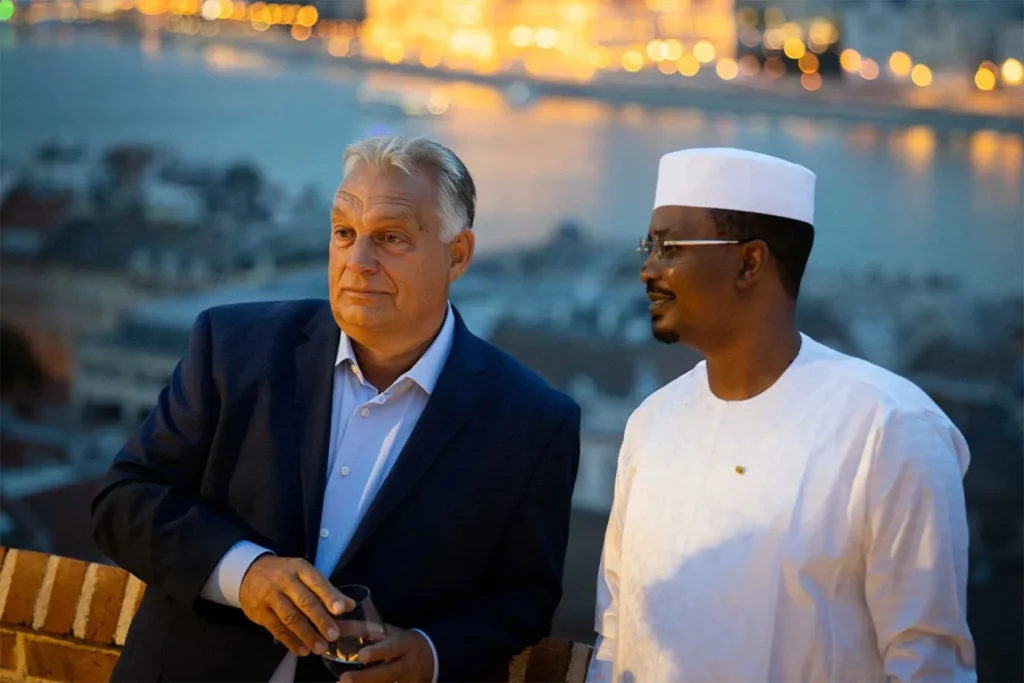
For example, Kenya stands out as a case where Hungary financed an entire package of projects in 2020 in cooperation with local Catholic organizations. Four separate initiatives were launched: the construction of a youth center in the Archiocese of Nyeri; the strengthening of educational capacities at Catholic seminaries; support for an interreligious dialogue programme at Tangaza University aimed at promoting peace in border areas; and a set of social projects in Nairobi’s poorer neighborhoods, including a shelter for survivors of violence against women, scholarships for schooling and vocational training, and support for women engaged in urban agriculture as a form of economic empowerment. Hungary also funded the establishment of basic health clinics in remote rural parts of Kenya. These examples suggest that, even when the point of departure is religious solidarity, projects often generate broader development impacts—educational, health-related, and economic—and are not limited to religious facilities alone.
The Hungarian government emphasizes that its projects align with UN humanitarian principles (humanity, neutrality, and independence) and contribute to the achievement of the UN Sustainable Development Goals (SDGs). In practical terms, Hungary Helps operates in ways similar to many religion-based humanitarian organizations: it relies on church networks to identify beneficiaries and implement assistance. The programme’s largest single partner to date has been the Antiochian Syriac Orthodox Church in the Middle East (Syria, Iraq, and Lebanon), while in Africa the main partners are typically Catholic dioceses and religious orders. Notably, local faith communities have served as direct implementers for most projects worldwide (97 projects), alongside Hungarian faith-based NGOs (52 projects). This approach, centered on direct financing of local actors, partly bypasses large international NGOs, which Hungary justifies on the grounds of efficiency and trust in partners who share Christian values.
Beyond project funding, Hungary has also launched a Scholarship Programme for Young Christians, enabling young people from persecuted communities to study at Hungarian universities. The idea is that these trained graduates will then return and contribute to their communities at home. The scheme covers students across three continents in cooperation with church partners. A similar foreign-student scholarship programme also exists without a religious criterion (Stipendium Hungaricum), and it, too, is counted in Hungary’s ODA statistics. Strikingly, nearly half of Hungary’s bilateral aid in 2023 went toward covering scholarship-related costs for students from developing countries studying in Hungary.
Comparison with the Approach of Western Donors
The Hungarian model offers a contrast to the standard practices of Western donor countries (OECD/DAC and EU members).
- Strategic Framework and Priorities: Western donors typically base their strategies on globally agreed objectives such as the SDGs, and they tend to justify aid in terms of poverty reduction, support for human rights, democracy, gender equality, and similar aims. By contrast, Hungary’s strategy is only loosely aligned with the SDGs—less so than the other Visegrád countries—and it explicitly foregrounds its own interests (economic, demographic, and security-related). For example, Hungary does not mention the promotion of gender equality at all, unlike most Western donors, for whom it is a standard priority. Likewise, democratization is not on Hungary’s agenda: it speaks instead of “stable institutions,” without references to democracy-building. This marks a clear distinction from the Western model, where aid is often linked—formally or informally—to development of democracy and the rule of law.
- Transparency and Accountability: Most traditional donors have established monitoring and evaluation systems, including independent evaluations and the regular publication of reports. Within the OECD/DAC framework, independent assessment of aid effectiveness is treated as a core principle. By contrast, Hungary only recently developed evaluation guidelines (in 2020) and still lacks independent programme assessment as well as a dedicated budget line for evaluations. In other words, external scrutiny of the results of Hungarian aid remains weak, with no detailed performance reporting. Among the Visegrád countries, only the Czech Republic regularly conducts and publishes evaluations of its development activities. Hungary tends to favor direct implementation through state institutions or closely affiliated organizations, which raises questions about transparency in the use of funds. That said, Hungary has established a public portal featuring a project map and basic information on ODA flows which is an important step toward greater public visibility, but still short of the full transparency expected under OECD/DAC standards.
- Long-Term Commitment and the Sustainability of Engagement: Traditional donors typically work with multi-year, country-specific strategies and seek to ensure continuity (even though political change can affect priorities on their side as well). Hungary, benefiting from the stability of Orbán’s rule, has pursued a relatively consistent policy since 2015, yet its geographic focus remains comparatively flexible. An initial emphasis on the Middle East later expanded to Africa once this became geopolitically expedient (for example, after the EU began pressing newer member states to play a more active role in addressing African migration). Western donors, especially EU members, generally try to strike a balance between national interests and shared sustainable-development objectives. Hungary’s long-term orientation is also closely tied to domestic politics: if, hypothetically, a change of government were to occur in Budapest, the donor strategy would likely be reconfigured as well (for instance, with less emphasis on religious elements). For now, Hungary Helps enjoys strong political backing and has even acquired a degree of legal and institutional anchoring: a law on the Hungary Helps program has been passed in Hungarian parliament, defining the objectives and procedures for Hungary’s international assistance. This suggests an intention to sustain the policy. Even so, compared with Western programs that have spent decades building a presence in specific African countries (through field offices, staff, and long-standing local partnerships), Hungary’s footprint remains relatively new and less deeply institutionalized on the ground.
- Cooperation with Local Actors: The principle of local ownership is widely embraced among Western donors and implies involving local governments, communities, and organizations in the planning and delivery of assistance. In practice, however, Western donors often channel aid through large international NGOs or multilateral organizations, which can alienate support from local communities. Hungary’s approach is unconventional in that it prioritizes direct cooperation with local (church-based) communities, bypassing both major international intermediaries and, at times, even host governments, in favor of community-level delivery. On the one hand, this can mean that aid reaches intended beneficiaries faster, with less bureaucracy, and that local actors have greater control (for example, bishops, parishes, or field-based humanitarian workers design projects on the ground, as in the Kenya case). On the other hand, it can create coordination problems: host-country governments may be insufficiently informed or involved, making it harder to align projects with national development strategies. Western donors generally seek to align assistance with partner-country strategies and to coordinate among themselves (in line with the Paris Declaration on Aid Effectiveness), whereas Hungary tends to operate more independently, within its own niche areas.
- Ideological Framework and Conditionality: Western aid, especially from the EU and countries such as Germany or the Scandinavian states, often comes with a values-based agenda, emphasizing human rights, good governance, inclusion of marginalized groups, environmental standards, etc. The clearest manifestation of this conditionality is linking assistance to improvements in democratic performance or anti-corruption efforts. Hungary has deliberately distanced itself from this kind of conditionality. It does not impose political prerequisites on its partners related, for example, to democracy or human rights (moreover, it does not even foreground democratization as an objective in its own strategy). For some actors in Africa, this may be appealing precisely because the aid arrives without “lectures on democracy.” Instead, Hungary tends to select partners in advance according to its own ideological compass, prioritizing Christian communities and conservative organizations.
Other Visegrád Countries as Donors
While we have focused primarily on Hungary, given the abundance of available data and the distinctive features of its approach, it is also useful to briefly consider other V4 members in their roles as donors, especially with regard to Africa:
Poland: As the largest of the newer EU member states, Poland also has the highest ODA volume in absolute terms (e.g., USD 984 million in 2021), though it has still remained below the pledged 0.33% of GNI (reaching roughly 0.15% of GNI by 2021). Geographically, Polish aid is oriented first and foremost toward its eastern neighborhood: the Eastern Partnership countries (Ukraine, Belarus, Moldova, and Georgia) receive the largest share of its bilateral assistance. Africa is a secondary priority; there are programmes in selected African countries (Tanzania, Kenya, and Ethiopia have appeared in earlier strategies), but the overall scale is limited. In thematic terms, Poland has traditionally emphasized support for education, health, agriculture, and entrepreneurship. Over the past decade, however, Poland has also moved away from democracy promotion — an area in which it had previously cultivated a clear profile (for example, support for “democratic” movements in Belarus, Ukraine, and elsewhere). Following the rise of a conservative government, Polish aid has placed less emphasis on transitions toward liberal democracy, and more on concrete development projects and “conservative values.” Studies suggest that Poland has increasingly directed funding toward NGOs that share the government’s conservative orientation, even when they have limited experience in classic democracy-support programming. Institutionally, Poland has professionalized its system: it adopted a Development Cooperation Act (2011), it operates with multiannual plans, the most recent covering 2021–2030 period, and has engaged actively with the DAC (a member since 2013). One notable feature is the creation of the Solidarity Fund PL foundation, which serves as an implementing agency for projects and has been granted the authority to manage EU funds as well. This indicates that Poland is increasingly looking to translate its bilateral expertise into access to larger European funding streams—for instance, for Ukraine’s future reconstruction. With regard to Africa, Polish engagement often takes the form of volunteer programmes (e.g., sending young volunteers to African missions) and smaller-scale infrastructure projects. Overall, however, Poland does not exhibit an approach as clearly “branded” as Hungary’s; it tends to follow broader EU patterns (participation in EU Africa-related funds and support for global initiatives). Ideologically, Poland shares some positions with Hungary (for example, skepticism toward conditioning aid on LGBT rights or reproductive rights), but it has not formally incorporated religious rhetoric into its aid policy. Still, it is worth noting that after the October 2023 elections won by Donald Tusk, Poland began aligning its policy more closely with the EU once again.

Czech Republic: The Czech Republic has positioned itself as the most technocratic, and arguably the most “Western”of the V4 donors. Its aid budget remains relatively modest (around 0.13% of GNI, roughly USD 299 million in 2021), but it is designed and delivered in line with mainstream development-policy principles. Czech strategy explicitly links priorities to the Sustainable Development Goals and follows standards such as Policy Coherence for Development, gender equality (a core Czech priority, unlike in Hungary), and aid effectiveness. Unlike Hungary and Poland, development policy in the Czech Republic attracts relatively little high-level political attention, which has given experts and the bureaucracy more room to shape it according to OECD/DAC best practice. The Czech Development Agency (CzDA) implements projects in priority countries that include several African states Ethiopia, Angola, Mali, and Zambia. Available data suggest that, within the V4, the Czech Republic has had the highest relative share of aid directed to sub-Saharan Africa, with roughly 20–30% of its bilateral ODA going to the region in recent years. This reflects an effort to follow EU and DAC recommendations to concentrate assistance on the poorest countries, given Africa’s centrality to the global fight against poverty. Thematically, the Czech Republic focuses on areas where it has established expertise: transition assistance (sharing experience with democratic reforms), education, water and sanitation, and social inclusion. It continues to highlight its peaceful transition and democratization experience as a comparative advantage and actively offers it, most notably through its Transformation Cooperation Programme, in place since 2005. In this sense, the Czech approach represents a markedly different model from Hungary’s: it is almost fully aligned with the Western donor mainstream. Even the OECD, in its assessments, has praised the Czech Republic for largely embracing the key norms of the international development community. The main constraints are financial—aid levels remain low relative to GNI. The other constraint is limited political push for more innovative initiatives. However, in terms of transparency and planning, the Czech Republic is often seenas a regional benchmark, by DAC standards.
Slovakia: Slovakia is the smallest donor among the V4, with ODA at around 0.14% of GNI (about USD 141 million in 2021). Like the Czech Republic, Slovakia long ran its development policy largely in line with the EU framework, with limited high-level political interference. It established its own development agency (SlovakAid) and, throughout the 2000s and 2010s, designated focus countries that included several African states (for example Kenya and South Sudan — alongside Afghanistan as a non-African exception). Interestingly, Slovakia previously had a relatively wide geographic spread, and it was sometimes criticized for dispersing aid across too many regions. In 2021, the Slovak government revised its approach and removed sub-Saharan Africa as a regional priority in order to reduce fragmentation and concentrate more on Europe (the Western Balkans and the Eastern Partnership). In practice, this amounted to a partial withdrawal from much of Africa as a theatre of engagement, raising questions about Slovakia’s commitment to the global poverty-reduction agenda. The shift was driven largely by limited capacity: policymakers argued that small amounts of funding “spread thinly” across multiple continents produced little impact, and that it was more effective to focus on the immediate neighbourhood where Slovakia also has clearer political interests (for instance Moldova, Ukraine, and the Balkans). In this sense, Slovak policy moved away from earlier idealism — when, as a newer EU member, it sought to contribute in Africa as well—toward a more pragmatic stance. Strategically, Slovakia, again like the Czech Republic, retains the rhetoric of „transition know-how“ and democratic values, but implementation on the ground remains modest. Transparency is also limited: some reports are published, but there are no regular independent evaluations. Development assistance has a low political profile in Slovakia — there has been neither a strong conservative turn as in Hungary and Poland, nor a flagship initiative of its own—which means Slovak aid depends largely on the technical capacity of a small development agency and, to some extent, on EU guidelines.
Conclusion
Over the past few years, Hungary has emerged as an unusual new donor in Africa and other parts of the Global South. Its aid policy reflects a blend of national interests, the governing regime’s ideological convictions, and broader strategic ambitions on the international stage. Politically, Hungary uses assistance as a tool to expand its influence and to project its positions: anti-migration and sovereigntist policies within multilateral settings. Economically, it makes little attempt to hide the fact that it links aid to the promotion of domestic business and exports, more openly than most Western donors. Culturally and religiously, Hungary has brought back to the main stream a dimension that for a long time remained marginal in global development policy: the protection of persecuted Christians.
In Africa, Hungary’s assistance remains small in scale compared with major players such as the United States, EU donors, or China. Its significance, however, lies less in the numbers than in the distinct model it represents. Compared with the Western approach, the Hungarian style raises questions about effectiveness and sustainability: will direct funding for church-led projects generate more lasting development outcomes, or will it mainly provide short-term relief? Does sidelining political reform mean that underlying problems in partner countries—such as weak governance and corruption—remain unaddressed, causing needs to recur? And how resilient is this policy if Hungary were to face economic strain or a domestic political shift?
For the other Visegrád countries, the Hungarian case is instructive but difficult to replicate. Poland has its own priorities and, so far, has not sought to “religionize” its aid. The Czech Republic and Slovakia remain closer to the Western mainstream, with less politicization. The future of development-assistance models in Central and Eastern Europe will depend to a large extent on whether Hungary’s approach delivers tangible diplomatic or economic returns. If this kind of “niche” strategy proves to bring Hungary new allies and markets, others may well follow some of its steps. Conversely, if it turns out to be largely a propaganda project with limited wider impact, it will remain an interesting but bounded departure from conventional donor policy and practice.
Hungary’s donor practice is a reminder that development assistance is never free of normative and political connotations. The new EU member states initially set out by emulating Western donors, but over time they began to inject their own perspectives—whether rooted in transition experience, geopolitical interests, or religious solidarity.
It is also clear that the field of development assistance has become a more competitive arena within international relations. The Global West advances a model grounded in “values” and conditionality, while Eastern and Central Europe are trying to craft their own variation of that model. Non-European actors—whom we have not discussed here—pursue their own geopolitical objectives as well. It is time for Serbia, too, to formulate a clear policy toward the countries of the Global South: the memory of Tito is fading, and sporadic humanitarian donations branded Serbia Aid, which politicians occasionally use as photo opportunities, do not deliver much in the way of results.

Iranizacija u Bugarskoj (4)
Iranizacija na Kosovu (3)
Iranizacija i Albanija (2)
Iranizacija na Balkanu (1)
ETNOPSIHIČKE KARAKTERISTIKE BALKANSKIH NARODA PROKLETSTVO ILI DAR II deo – dar
Etnopsihičke karakteristike balkanskih naroda – prokletstvo ili dar I deo – prokletstvo

Islamizam i nacionalizam: Od hegemonijskog sukoba ka saradnji (Drugi deo)

Od sukoba identiteta ka savezu hegemonije: Formiranje, transformacija i budućnost Islamističke i nacionalističke politike u Turskoj nakon 2016. godine (Prvi deo)
Geopolitički potencijal Balkana: Regionalnizacijom do stabilnosti
Eho Balkana